

Andamine Crusher
Becerro
- Desde
- 13 Nov 2025
- Mensajes
- 13
- Tema Autor
- #1
Selecting the right mobile impact crusher is a critical decision that directly influences the productivity, cost-effectiveness, and overall success of your crushing operations. Unlike a stationary a crusher, a mobile unit offers unparalleled flexibility but requires a more nuanced evaluation to ensure its specifications align perfectly with your specific material, site conditions, and production goals. The process involves analyzing a comprehensive set of technical and operational parameters that extend far beyond simple price comparisons or brand preferences. Key considerations include the machine's fundamental crushing capacity and power source, the specific design of its impact crushing chamber, its mobility features and transport dimensions, and the advanced control systems that govern its operation. A thorough understanding of these specifications will guide you toward a crusher that not only processes material efficiently but also integrates seamlessly into your workflow, minimizing downtime and maximizing return on investment. This detailed assessment is essential for transforming a major capital expenditure into a reliable, high-performing asset on your job site.
Evaluating Crushing Capacity and Feed Material Properties
The most fundamental specification to consider for any mobile impact crusher is its capacity, which must be carefully matched to both your production targets and the characteristics of the raw material you will be processing. The rated throughput, typically expressed in tonnes per hour, provides a baseline, but this figure is highly dependent on the feed material's hardness, abrasiveness, and initial size. A machine might be rated for 300 tph when processing soft limestone, but its output could be significantly lower when crushing hard, abrasive granite or recycled concrete with embedded rebar. Therefore, it is imperative to analyze the crusher's design in relation to your specific feed stock; this includes the rotor's diameter and width, which determines the impact energy and volume of material it can process in a single pass. The type of impact crusher—whether a primary (for larger feed size) or secondary (for finer product shaping) unit—must also be selected based on its position in your crushing circuit. Choosing a crusher with the appropriate capacity and material compatibility ensures efficient operation, prevents unnecessary wear on components, and guarantees that the plant can meet your aggregate production demands without becoming a bottleneck in your operation.Analyzing Rotor Design and Impact Crushing Action
The heart of any mobile impact crusher is its rotor system, and the specifications related to its design and kinetic energy are paramount in determining the machine's effectiveness and final product quality. The rotor, a massive rotating component that houses the impact hammers or blow bars, must be robust enough to withstand the tremendous forces generated during operation. Key specifications to scrutinize include the rotor's diameter, its overall width, and its rotational speed, typically measured in meters per second at the tip of the hammers; a higher tip speed generally results in a greater degree of fracturing and a finer product, while a lower speed may be better for larger aggregate production. Furthermore, the design of the rotor itself—whether it is a solid, welded configuration for heavy-duty applications or an open, lightweight design for less abrasive materials—directly impacts its durability and the types of material it can efficiently process. The configuration of the crushing chamber, including the number of crushing zones and the angle of the impact aprons or grinding paths, also plays a crucial role in how the material is fractured and shaped. When selecting a crusher, understanding these intricate details of the impact crushing mechanism is essential for achieving the desired product gradation, shape, and production rate, making the rotor one of the most critical components to evaluate in the entire machine.Assessing Power Source and Operational Autonomy
The choice of power plant for your mobile impact crusher is a crucial specification that significantly affects its operational flexibility, fuel consumption, and environmental compliance on diverse job sites. Most models are offered with either a diesel-hydraulic or diesel-electric drive system, each with distinct advantages. A diesel-hydraulic system, where a diesel engine directly powers hydraulic pumps that drive the crusher and conveyors, is often favored for its simplicity and high power-to-weight ratio, making it ideal for frequent relocations. In contrast, a diesel-electric system uses a diesel engine to generate electricity, which then powers electric motors for the crusher and other components; this setup can be more fuel-efficient, especially in variable load conditions, and allows for easier connection to an external grid power source, reducing noise and emissions during extended stationary operation. The horsepower rating of the prime mover is another vital specification; an underpowered engine will struggle with hard materials, leading to frequent stalling and increased wear, while an overpowered one may lead to unnecessary fuel costs. Therefore, when choosing a crusher, the power source must be evaluated not just for its raw output but for its suitability to your specific operational pattern, site regulations, and long-term running costs.Understanding Mobility Features and Transport Logistics
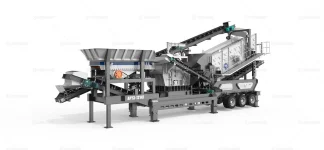
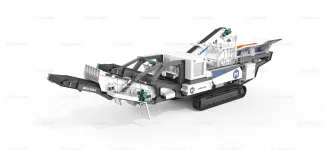
While the crushing mechanism is the core of the machine, the mobility platform of a mobile impact crusher is what defines its operational versatility and must be carefully evaluated against your site access and relocation needs. These plants are typically mounted on either wheeled chassis or more robust crawler tracks, with the choice having profound implications. A tracked mobile impact crusher offers superior ground pressure distribution and stability on soft or uneven terrain, allowing it to access challenging locations that would be impossible for wheeled units. However, tracked units are generally heavier, slower to relocate, and may require a low-bed trailer for transport between distant sites. Wheeled models, on the other hand, can be moved more quickly via prime mover on public roads, offering greater flexibility for multi-site contractors but often requiring more level and stable ground for setup. Critical transport specifications to verify include the machine's total weight, its width, height, and length when folded for transport, and its axle configuration, all of which determine whether it requires special permits for highway travel. Selecting a crusher with the right mobility features ensures that the machine can be efficiently positioned for optimal material flow and easily relocated as the project progresses, maximizing its utilization and minimizing logistical downtime.Reviewing Control Systems and Maintenance Accessibility
The sophistication of the control system and the ease of maintenance are specifications that profoundly influence the daily operation, uptime, and total cost of ownership for your mobile impact crusher. Modern plants are equipped with programmable logic controller systems that allow for precise control over the entire crushing process, from feeder speed and rotor velocity to conveyor belt sequencing. Advanced features to look for include automatic setting regulation to maintain a consistent product size, remote monitoring capabilities that allow for diagnostics from an office, and safety interlocks that protect the machine from damage. Equally important is the design for serviceability; a well-designed mobile impact crusher will have easy access doors, safe walkways, and centralized grease banks that allow for daily maintenance to be performed quickly and safely. The layout should facilitate the replacement of high-wear parts like blow bars, impact aprons, and screen meshes without requiring excessive disassembly or special tools. When evaluating a crusher, prioritizing these operational and maintenance specifications will lead to a machine that is not only powerful and productive but also reliable and cost-effective to maintain over its entire service life, ensuring maximum availability and a better return on your investment.Conclusion
Choosing the right mobile impact crusher demands a holistic analysis of a wide array of interconnected specifications, from its core crushing mechanics and power source to its mobility and control systems. This decision should never be based on a single metric but on how well the collective features of the machine address the unique demands of your material, production goals, and operational environment. By meticulously evaluating the rotor design for your specific application, selecting an appropriate power and mobility configuration, and ensuring the unit is equipped with user-friendly controls and accessible maintenance points, you can select a crusher that will deliver optimal performance and reliability. This comprehensive approach to specification analysis transforms the purchasing process from a simple transaction into a strategic investment, ensuring that the mobile impact crusher you choose becomes a durable, efficient, and profitable cornerstone of your crushing operations for years to come.